HomeHealth Information
Eczema Treatment
Men's Health
Eczema Treatment
From Steroid Resistance to Antibiotic Fear
Yidi Di
November 21, 2023
6 minutes
Share
 Yidi Di

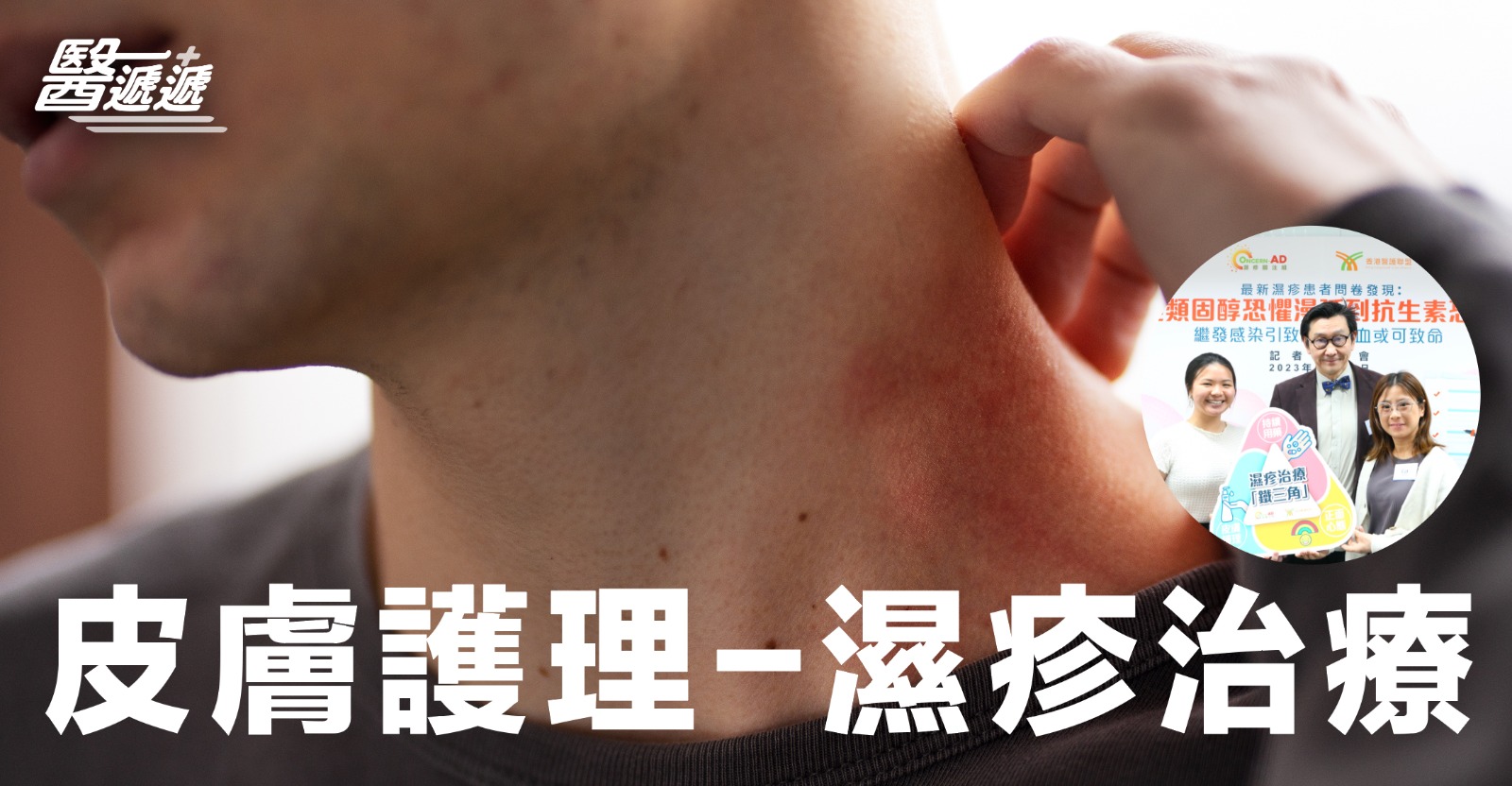
From Steroid Reluctance to Antibiotic Fear: Over 90% Worry About Side Effects; More Than Half of Patients Do Not Complete Their Treatment as Prescribed. Three Major “Psychological Barriers” to Eczema Treatment Hinder Efficacy; Secondary Infections Can Lead to Staphylococcus aureus Bacteremia, Which Can Be Fatal

Atopic dermatitis (eczema) is a common skin condition in Hong Kong; one in every five people experiences eczema at some point in their lives, and the number of patients in Hong Kong is estimated to be 1.5 million. Generally, people with eczema should use moisturizers and hypoallergenic skincare products to strengthen the skin’s barrier function.Depending on the severity of the condition, anti-inflammatory medications such as corticosteroids or other treatments—including wet wraps, oral immunosuppressants, and phototherapy—may be prescribed. Because the skin barrier of eczema patients is compromised, they are prone to skin infections, the most common of which is Staphylococcus aureus infection. Severe cases can even lead to bacterial sepsis, which can be life-threatening and must never be taken lightly.

Source: Eczema Awareness Group

The Eczema Awareness Group, which has long provided information and support to eczema patients in Hong Kong, recently conducted a survey of eczema patients and caregivers regarding adherence to and the effectiveness of various treatments. The survey found that not only has the fear of steroids among eczema patients not diminished, but they also harbor resistance toward and misunderstandings about the use of antibiotics. These biases and misconceptions regarding medication may affect patients’ adherence to treatment and its effectiveness, potentially leading to unforeseeable consequences.Today, the Eczema Concern Group held a press conference on this matter, beginning with a presentation of the survey results by its executive committee member, Chen Junyi.

The Effectiveness of Natural Remedies and Folk Remedies for Treating Eczema Is Questionable

In October, the Eczema Support Group successfully surveyed 200 people with eczema via an online questionnaire. Seventy percent of the respondents had moderate to severe eczema, and 51% of them were between the ages of 19 and 40; approximately 20% were between the ages of 41 and 50.The respondents had all undergone various treatments, including Western medicine, traditional Chinese medicine, as well as natural therapies and folk remedies (such as aromatherapy, taking probiotics and vitamins, and using alligator oil and calendula ointment). Nearly 60% and 56% of respondents, respectively, considered Western and traditional Chinese medicine treatments to be effective or very effective;Nearly 30% of respondents had used natural therapies or folk remedies, of whom only 11% considered them effective or very effective.

More than 90% believe steroids have significant side effects More than half have not used steroids as prescribed by their doctor

First, regarding medication use, 87% of respondents had been prescribed steroid medications to treat eczema. Among them, as many as 56% did not follow their doctor’s instructions or complete the full course of treatment. The main reason was concern about side effects (87%); 40% believed there was no need to continue taking the medication once their condition improved; and more than 30% discontinued treatment on their own because they felt it was ineffective.Regarding the use of steroids to treat eczema, the majority of respondents held misconceptions or biases. Over 90% of respondents agreed or strongly agreed that steroids have significant side effects and should be discontinued as soon as symptoms improve; over 80% agreed or strongly agreed that using steroids is addictive and would try to avoid using them as much as possible;more than 70% would choose steroid-free medications or ointments, even if they were more expensive; and more than 60% would ask their doctors not to prescribe steroids.

Nearly 80% are concerned about the side effects of antibiotics; more than 40% have low adherence to antibiotic treatment

In addition to steroids, antibiotics are also commonly prescribed to patients with eczema. When a patient’s skin develops a bacterial infection, antibiotics are necessary to effectively combat the bacteria causing the infection and control the condition.However, the survey results reveal that more than 40% of respondents take antibiotics as prescribed but do not complete the full course of treatment, primarily because 79% are concerned about side effects; more than 60% believe that using antibiotics leads to antibiotic resistance and therefore try to avoid them whenever possible; 27% believe the treatment is ineffective; and 21% believe there is no need to continue taking the medication once their condition improves.

Nearly 60% believe that the moisturizers distributed by government clinics are ineffective

As for skin care, most respondents place great importance on it; nearly 70% apply moisturizer at least twice a day—morning and night—and some even apply it three or more times a day;30% of respondents apply moisturizer occasionally but not on a regular basis, while 2% do not have this habit, mainly because they find it inconvenient (48%) or dislike the greasy feeling after applying moisturizer (63%).Currently, people with eczema can obtain moisturizers when seeking treatment at government hospitals/clinics or private clinics, or they can purchase them on their own. Over 70% and 80% of respondents, respectively, believe that moisturizers provided by private doctors and those purchased on their own are effective or very effective, but nearly 60% of respondents believe that moisturizers distributed by government hospitals/clinics are ineffective or completely ineffective.

An Eczema Patient Shares Their Experience with a Bacterial Infection

A summary of the survey results reveals a concerning trend: more than half of eczema patients do not follow their doctors’ instructions regarding medication use or complete their treatment courses, primarily due to concerns about the side effects of steroids and antibiotics. Fear of steroids among eczema patients has persisted for a long time; even though the medical community has spent years trying to educate the public on proper usage and concepts, it has failed to dispel these misconceptions and prejudices.What is concerning is that the same fears and prejudices are evident regarding the use of antibiotics. When a bacterial infection occurs but the full course of treatment is not completed as directed by a doctor, it becomes easier for bacteria to develop drug resistance. In severe cases, this can even lead to a bacterial infection entering the bloodstream, which may be life-threatening. Cat, an eczema patient, spoke at the press conference to share her personal experience with a bacterial infection.

Applying moisturizer is a hassle—it's hard to follow the doctor's instructions exactly.

Cat, now 30 years old, has suffered from eczema since she was one and a half years old. During flare-ups, her skin becomes itchy and painful; in severe cases, it “weeps” and becomes inflamed. Her condition fluctuates and frequently relapses. “I remember as a child, I didn’t like applying the lard ointment or Vaseline prescribed by the doctor because I found it greasy, and the oil would leave marks on my books. My teachers would often scold me for getting my homework dirty.“Especially when my skin was inflamed and oozing, applying the ‘lard ointment’ and taking a shower were both very painful and stinging; sometimes I had to take painkillers before I could even shower. Applying moisturizer would make my skin feel tight, and sometimes it would even cause the sores to crack. On top of that, using the ‘lard ointment’ required mixing it with steroids in specific proportions—I found it all very troublesome.”As a result, although the doctor instructed her to apply moisturizer four times a day, Cat usually only applied it once or twice. After she started working, she couldn’t apply moisturizer on her way to work, making it even harder to follow the doctor’s recommended frequency.

Disappointed with Steroids Alternative Methods Were Completely Ineffective

She knows that steroids are effective, but she doesn’t always follow her doctor’s instructions to the letter: for one thing, she’s worried about side effects from long-term use, but the main reason is that she feels her symptoms improve while she’s on the medication, only to worsen immediately after she stops. To avoid disappointment, she figures it’s better not to start taking them at all—she doesn’t want to get her hopes up again.As for wet compresses, she finds them bothersome and exhausting. Every time she wraps herself up, she looks like a mummy, and afterward she has to keep reapplying ointment and moisturizer for at least four hours. In the summer, it gets very hot, and in the winter, she worries about getting too cold. To cure her eczema, Cat has also tried various alternative methods, including honeysuckle, sea salt, and natural handmade soap—the only things she hasn’t tried yet are blessed water and spiritual healing—but none of them have helped.

Extensive skin inflammation Constant oozing of blood and pus

Other treatments proved ineffective, and the condition kept recurring until it became even more severe during my college years. “The worst episode was around the time I graduated from college. I’d always remembered the doctor saying this condition would improve as I grew older, so I clung to a glimmer of hope. Who would have thought that, as an adult, not only did it not improve, but it actually got worse? I began to feel desperate; on top of that, the stress of exams made the condition even worse.At that time, Cat’s skin was inflamed over a large area; whenever she sat down and stood up, the floor would be covered in flakes of skin. At its worst, her entire body was almost completely covered in sores—red and painful. The sores constantly oozed blood and pus, and the thick dressings, soaked through with blood, had to be changed every half hour.

Staphylococcus aureus Bacteremia Causes Hypothermia; Delaying Medical Treatment Can Be Life-Threatening

Cat began experiencing alternating chills and fever, along with fatigue and dizziness. Thinking she had a fever, she eventually went to the emergency room, where she found out her temperature was only a little over 35 degrees Celsius. The doctor diagnosed a widespread Staphylococcus aureus infection on her skin, as well as a bacterial infection in her bloodstream, which had triggered hypothermia and caused her to lose the sensation of heat and cold on her skin.“The doctor said it was fortunate that I sought medical attention in time, because a bacterial blood infection can be life-threatening if not treated properly. After being admitted, the doctors prescribed the strongest antibiotics—both orally and via IV—and I was hospitalized for a month before being discharged.However, my condition worsened again after discharge. It turned out I had contracted an antibiotic-resistant strain of Staphylococcus aureus. When I was readmitted, the doctors were reluctant to use the strongest antibiotics again, fearing it might affect my liver and kidney function. This time, it took three weeks of hospitalization before my condition stabilized.” After being discharged, Cat had no idea how to prevent bacterial infections or what special care she needed, so she could only do her best to manage her eczema.

Eczema Patients Have an Imbalanced Skin Barrier; Staphylococcus aureus Worsens the Condition

Professor Han Jinlun of the Department of Pediatrics at The Chinese University of Hong Kong explained that Staphylococcus aureus is a common bacterium found on the skin’s surface. While it is detected on the skin of only 5% of healthy individuals, it is found on the skin of more than 70% of people with eczema. When eczema flares up, the skin’s microbiome becomes imbalanced—the number of harmful bacteria increases while beneficial bacteria decrease—which creates an environment conducive to the proliferation of Staphylococcus aureus.Excessive Staphylococcus aureus can form biofilms and produce superantigens, toxins, enzymes, and other proteins. These substances worsen the inflammatory response, exacerbate inflammation, block sweat glands, cause itching, and further damage the skin barrier, creating a vicious cycle. Wounds may also become infected, causing the condition to deteriorate significantly.“As in Cat’s case, a large area of the skin was infected with Staphylococcus aureus, leading to bacteremia and hypothermia—a very dangerous condition,” said Professor Han Jinlun.

As the saying goes, “Prevention is better than cure.” Professor Han Jinlun breaks down the “mental barriers” surrounding eczema treatment, as well as common issues related to medication and skincare, dispelling myths among patients and the public regarding steroid and antibiotic treatments. He first identifies the three major “mental barriers” in eczema treatment: “the fear of quitting steroids, the fear of Western medicine, and the fear of using skincare products.”

The "Inner Demon" of Eczema 1: "Misuse" Is the Main Cause of Steroid Addiction

“Steroid Phobia” refers to the public’s deep-seated fear of steroids, particularly when it comes to their use on children, as people believe they may affect children’s development or even turn them into “hairy kids”; some also worry about steroid addiction.Many people exaggerate the side effects of steroids to an extreme degree, recoiling at the mere mention of them, and even go out of their way to seek “miracle cures” or “folk remedies,” often using steroids without even realizing it. The real culprit behind steroid addiction is “misuse”; steroids have never been recommended for long-term use, and only incorrect dosages and prolonged use can trigger so-called addiction;As for side effects, while steroids do have some toxicity, they are also highly effective treatments for skin conditions and are affordable. When used appropriately, they are extremely safe and effective. There are many types of steroids, ranging from mild to strong, so you must never purchase or use them on your own; you must strictly follow your doctor’s recommendations.

The "Mental Demons" of Eczema, Part 2: "Neither East Nor West"—A Condition That’s Hard to Treat

In short, “Western Medicine Phobia” refers to the belief that Western medicine is ineffective—including the perception that moisturizing creams are too greasy, a fear of steroids, the belief that immune-modulating drugs cause cancer, the notion that wet compress therapy can easily lead to catching a cold, and the concern that antibiotics have too many side effects. Furthermore, eczema is seen as a chronic condition that cannot be completely cured. Those afflicted with “Western Medicine Phobia” distrust Western medicine yet also believe that traditional Chinese medicine is ineffective—a situation often described as “neither traditional Chinese medicine nor Western medicine works,”so naturally, their condition is unlikely to improve. In fact, with a deeper understanding of the mechanisms underlying eczema, there are now more effective, targeted treatments and new medications available. Professor Han Jinlun advises patients to communicate frequently with their doctors, as this helps doctors develop appropriate treatment plans. Patients should also follow their doctors’ instructions when taking medication; there is still plenty of hope for managing eczema.

Eczema “Mental Struggles” 3: Any moisturizer is best when used consistently

As for patients with “skin obsession,” they tend to fixate on various perceived flaws in certain moisturizers—such as an unpleasant odor or a perceived lack of luxury—while simultaneously pursuing “all-natural” products that doctors view as fads. Some even forgo proper medical treatment, often resulting in a delay in receiving timely care.Many patients have skin that appears normal on the surface but is actually inflamed, so moisturizers play a crucial role in the prevention and treatment of eczema. People with sensitive skin should avoid moisturizers with overly complex ingredients or of unknown origin; those containing fragrances may also cause allergic reactions. Numerous studies indicate that patients tend to use moisturizers infrequently or not at all. In fact, regardless of the specific product, consistent and persistent use is the most effective approach.

Effective moisturizers can restore the skin barrier's structure and prevent bacterial invasion.

To reduce the impact of bacteria on people with eczema, studies have shown that effective moisturizers can restore the skin barrier’s structure, thereby preventing bacterial invasion. Professor Han Jinlun recommends that people with eczema pay attention to the following skincare tips:

• Cleanse your skin daily

• Don’t take too long in the shower; keep the water at a moderate temperature, and avoid using water that’s too hot.

• When showering, do not rub your skin vigorously with a towel or sponge to avoid irritating it

• Avoid using soap, scented cleansers, or disinfectants when bathing, as they can irritate the skin and strip away too much natural oil.

• Regular skincare to keep the skin moisturized, combined with appropriate medical treatment

• Take appropriate medication when symptoms flare up. If a secondary infection develops, seek medical attention immediately and complete the full course of antibiotics on time, as directed by your doctor. Avoiding treatment out of fear of side effects will only cause the eczema to continue worsening.

Keep in mind the “iron triangle” of eczema treatment: consistent medication, skin care, and a positive mindset

Professor Han Jinlun concluded by emphasizing that eczema is not incurable, but patients must not blindly trust incorrect treatment methods and must seek proper medical care.“Of course, we must not overlook the impact of Staphylococcus aureus on eczema patients. Keep in mind the key ‘iron triangle’ of eczema treatment—consistent medication, skin care, and a positive mindset. With these three simple steps, eczema can be effectively controlled in over 90% of patients. Although it cannot be completely cured, patients should maintain a positive mindset and learn to live with their eczema.”

The above information is for reference only and should not be construed as medical advice, nor should it replace consultation with a qualified healthcare professional regarding your personal health condition.